



Customer relationship management (CRM) software plays an important role in helping businesses manage customer information, organize sales activities, track leads, and improve communication. As companies grow, choosing the right CRM solution becomes increasingly important. However, business owners often face a common question: Should they invest in a custom CRM or use an off-the-shelf software solution?
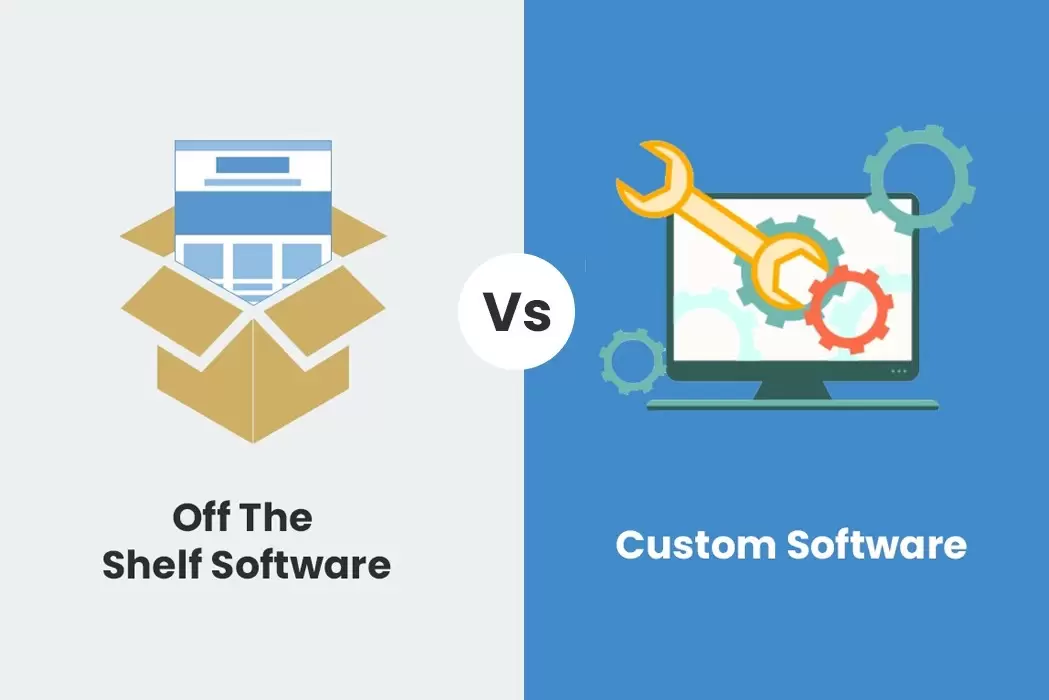
Both options offer valuable features, but they serve different business needs. Off-the-shelf CRM platforms provide ready-made tools that businesses can start using quickly, while custom CRM solutions are developed around specific workflows, operational requirements, and long-term goals.
Understanding the differences between these approaches can help businesses make a more informed investment and choose technology that supports their growth.
What Is an Off-the-Shelf CRM?
An off-the-shelf CRM is a ready-made software platform designed for businesses that need standard customer management features. These systems are developed for a broad audience and typically include tools for contact management, sales tracking, marketing automation, reporting, and customer communication.
Businesses can usually subscribe to these platforms and begin using them without investing in a complete software development project.
One of the biggest advantages is convenience. Companies can access established features, receive regular software updates, and benefit from existing integrations. However, these platforms may include features that a business does not need while lacking certain functions required for its specific operations.
What Is a Custom CRM?
A custom CRM is a software solution developed specifically for an organization’s requirements. Instead of adapting business processes to fit an existing platform, companies can build a system that follows their preferred workflows.
Custom CRM solutions can include specialized dashboards, automated tasks, customer communication tools, sales pipelines, reporting features, and integrations with existing business applications.
Custom CRM Buildouts are particularly useful for companies with complex operations or unique customer management requirements. They provide greater control over how information is organized, how employees interact with the system, and how different departments share customer data.
Custom CRM vs. Off-the-Shelf Software: Key Differences
Although both solutions help businesses manage customer relationships, several important differences influence which option is more suitable.
1. Customization and Flexibility
Customization is one of the biggest differences between custom CRM software and ready-made platforms.
Off-the-shelf systems generally provide predefined features and settings. Users can adjust certain functions, customize dashboards, and select available integrations, but they may encounter limitations when trying to change the software’s underlying structure.
A custom CRM offers greater flexibility because developers can design features around the company’s actual requirements. Businesses can choose how sales pipelines work, what information employees collect, and which activities should be automated.
For organizations with specialized processes, a customized solution can provide a more natural and efficient working environment.
2. Initial Development and Setup Costs
Cost is another important factor when comparing these two options.
Off-the-shelf CRM platforms usually have lower initial costs because businesses pay a subscription fee rather than funding an entire development project. This makes them attractive to startups and smaller organizations with limited budgets.
Custom CRM development requires a larger initial investment. The final cost depends on the number of features, system complexity, integrations, security requirements, and development time.
However, businesses should also consider long-term expenses. Subscription fees, additional user licenses, premium features, and integration charges can increase the overall cost of ready-made software over time.
A custom CRM may become more cost-effective for organizations that need extensive customization or expect to use the system for many years.
3. Scalability and Business Growth
A CRM system should support a business as it expands. Companies may eventually need additional users, more advanced reporting, new departments, and more complicated customer management processes.
Off-the-shelf software can offer scalable subscription plans, but businesses may need to upgrade to expensive packages to access advanced capabilities.
Custom CRM solutions can be designed with future expansion in mind. Developers can create flexible structures that allow businesses to introduce additional modules, improve automation, and support new operational requirements.
This makes scalability an important consideration when selecting a CRM solution.
4. Integration With Existing Business Tools
Most companies use multiple digital tools to manage daily operations. These may include accounting platforms, email marketing software, payment systems, inventory applications, and project management tools.
Popular CRM platforms often provide integrations with commonly used applications. This can make implementation easier, particularly for businesses that rely on standard software.
Custom CRM development allows companies to build integrations around their existing technology environment. This can improve data sharing and reduce the need for employees to switch between disconnected applications.
However, custom integrations require proper development, testing, and ongoing maintenance.
5. Ease of Use and Employee Productivity
A CRM should make employees’ work easier rather than introduce unnecessary complications.
Off-the-shelf platforms often provide established interfaces and documentation. Employees may also find tutorials and training resources that help them understand the software.
However, some platforms include numerous features that businesses rarely use. This can make the interface confusing and create unnecessary steps in everyday workflows.
A custom CRM can focus on the tools employees actually need. Its interface, navigation, dashboards, and workflows can be designed to match the organization’s working methods.
When combined with thoughtful custom web design, a CRM-related interface can provide a consistent and user-friendly digital experience.
Advantages of Choosing Off-the-Shelf CRM Software
Ready-made CRM platforms remain a practical choice for many organizations. Their main advantages include:
- Faster implementation: Businesses can start using existing features without waiting for a complete development process.
- Lower initial investment: Subscription-based pricing reduces the need for large upfront spending.
- Regular updates: Software providers typically handle maintenance, improvements, and security updates.
- Existing integrations: Many platforms connect with popular business applications.
- Training resources: Documentation, tutorials, and customer support can make adoption easier.
For startups and businesses with straightforward customer management requirements, an off-the-shelf solution can provide everything necessary without unnecessary development expenses.
Advantages of Investing in a Custom CRM
Custom CRM software can offer significant advantages when a company has requirements that standard platforms cannot fully support.
Business-Specific Features
A custom solution can include tools designed around the organization’s industry, services, sales process, and customer journey. This reduces the need to rely on workarounds or external applications.
Greater Operational Control
Businesses have more influence over the system’s structure, functionality, and development priorities. They can decide which features should be introduced and how different departments should use the platform.
Improved Workflow Automation
Custom automation can help eliminate repetitive tasks, organize follow-ups, assign leads, generate reports, and notify employees when specific actions are required.
Better Alignment With Company Goals
A CRM designed around business objectives can support more accurate reporting, improved customer management, and better coordination between departments.
Room for Future Improvements
As business requirements change, custom CRM systems can be expanded with additional features and integrations instead of forcing the organization to change its entire working process.
When Should a Business Choose Off-the-Shelf Software?
Off-the-shelf CRM software is often the better option when a business needs basic customer management capabilities and wants to get started quickly.
It may be particularly suitable for startups, small businesses, and organizations with standard sales processes.
Companies with limited development budgets may also prefer subscription-based software because it provides access to established features without requiring a major upfront investment.
If an existing CRM already supports most of the company’s requirements, building a completely new system may not provide enough additional value to justify the expense.
When Is a Custom CRM the Better Investment?
A custom CRM becomes more attractive when existing platforms create operational limitations.
For example, a business may have complex sales processes, specialized customer data requirements, or several departments that need to share information through a centralized system.
Organizations may also consider Custom CRM Buildouts when they spend excessive time managing spreadsheets, transferring information between applications, or manually completing repetitive administrative tasks.
A customized system can address these challenges by bringing essential tools and workflows together.
Businesses planning long-term digital expansion may also benefit from a CRM that can evolve alongside their operations.
The Role of Custom Web Design in CRM Development
A successful CRM is not only about functionality. Its design also influences how easily employees can navigate the system and complete their daily responsibilities.
Custom web design can help create intuitive dashboards, organized navigation, responsive layouts, and clear information displays.
A well-designed interface allows employees to find customer details, review sales progress, and manage tasks without unnecessary confusion.
Design considerations should include accessibility, mobile responsiveness, consistent visual elements, and straightforward navigation.
When businesses invest in both functional development and thoughtful design, they can create a CRM experience that supports productivity and encourages employee adoption.
Important Factors to Consider Before Making a Decision
Before selecting either solution, businesses should evaluate several important factors.
Current business requirements: Identify the features needed to manage customers, leads, sales activities, and reporting.
Available budget: Compare subscription expenses with custom development, implementation, maintenance, and future upgrade costs.
Technical requirements: Consider existing software, integration needs, hosting arrangements, and security expectations.
Employee adoption: Choose a solution that employees can understand and use consistently.
Future expansion: Think about how the business may change over the next three to five years.
Data security: Evaluate access permissions, backup procedures, data protection practices, and applicable privacy requirements.
Taking time to assess these factors can prevent businesses from investing in software that becomes unsuitable as their operations develop.
Common Mistakes Businesses Should Avoid
One common mistake is choosing CRM software based entirely on its price. A low-cost platform may initially appear attractive, but additional subscriptions and limited functionality can create problems later.
Another mistake is investing in a custom system without clearly defining business requirements. Developing unnecessary features can increase costs and make the software difficult to maintain.
Businesses should also avoid overlooking employee training. Even a well-developed CRM can fail if employees do not understand how to use it correctly.
Finally, companies should not ignore ongoing maintenance. Both custom and off-the-shelf systems require attention to security, performance, data quality, and reliability.
Can Businesses Combine Custom and Off-the-Shelf CRM Solutions?
Yes. Businesses do not always need to choose one approach exclusively.
A hybrid strategy can involve using an established CRM platform while developing custom integrations, dashboards, automation, or additional features around it.
This approach allows companies to benefit from existing software while addressing specific operational gaps.
For example, a business might use an established platform for contact management but develop a custom reporting dashboard to track industry-specific performance indicators.
A hybrid solution can reduce development requirements while providing more flexibility than a standard subscription alone.
Conclusion: Which CRM Solution Fits Your Business Best?
Choosing between custom CRM software and off-the-shelf platforms depends on business size, operational complexity, available resources, and long-term objectives.
Off-the-shelf software is a practical option for companies that need standard features, quick implementation, and predictable subscription costs. Custom CRM solutions are more suitable for organizations that require specialized workflows, advanced integrations, greater flexibility, and long-term control.
Businesses should evaluate their current challenges and future goals before making a decision. Investing in the right CRM can improve customer relationships, reduce repetitive work, and support sustainable growth.
Ultimately, the best solution is not necessarily the one with the most features. It is the one that fits the way a business operates and provides lasting value as the organization grows.